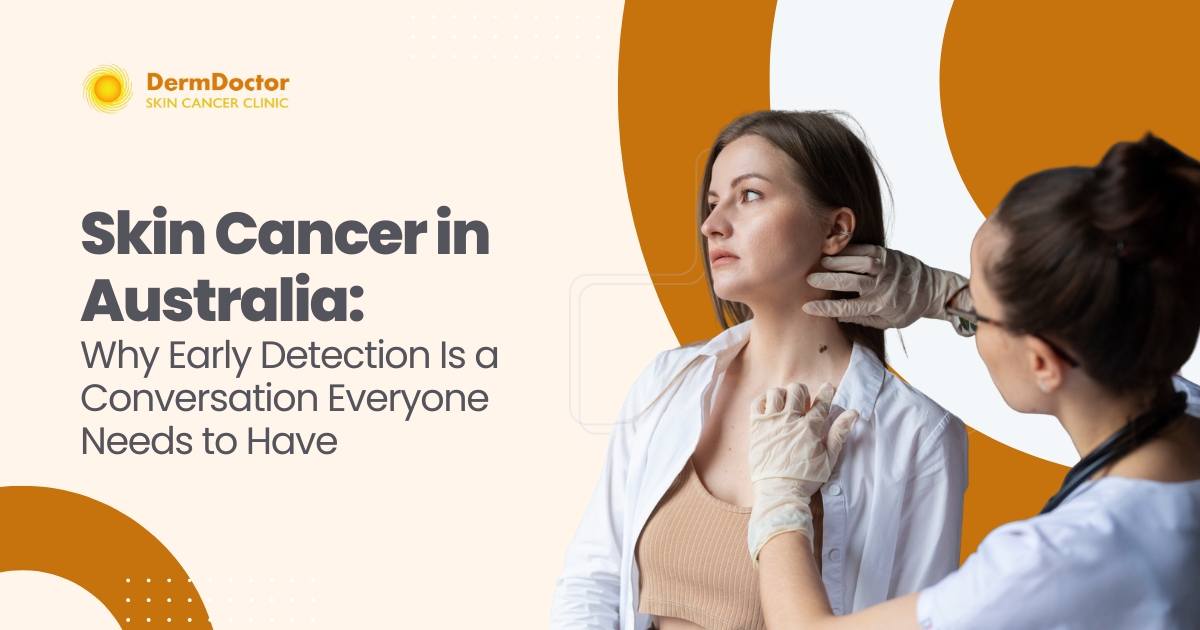
Skin Cancer in Australia: Why Early Detection Is a Conversation Everyone Needs to Have
Australia has one of the highest rates of skin cancer in the world. That is a fact most Australians have heard before, perhaps so many times that it has started to feel like background noise rather than an urgent personal concern. But the statistics behind that headline are genuinely striking. According to the Cancer Council Australia, melanoma alone accounts for around 2,000 deaths each year, and yet it is one of the most treatable cancers when caught early.
The challenge, then, is not really awareness of the general risk. It is translating that awareness into action, specifically the habit of getting skin checks done regularly and not putting them off.
What Is Skin Cancer, and Why Is Australia at Higher Risk?
Skin cancer occurs when damage to skin cells, most often caused by ultraviolet (UV) radiation from the sun, triggers abnormal cell growth. There are three main types:
- Basal cell carcinoma (BCC): The most common form, typically slow-growing and rarely spreads, but can cause significant local damage if left untreated
- Squamous cell carcinoma (SCC): The second most common, which can spread to other parts of the body if not caught and treated
- Melanoma: The most dangerous type, capable of spreading rapidly to other organs, but highly treatable when detected at an early stage
Australia’s geographic position means Australians are exposed to particularly intense UV radiation, especially in central and northern regions. Add to this the cultural legacy of outdoor lifestyles, and it becomes clearer why the risk profile here is so different from many other countries.
Importantly, skin cancer does not discriminate by age. While the risk does increase with cumulative sun exposure over a lifetime, younger Australians are by no means immune, particularly those who experienced significant sun exposure or sunburn in childhood.
What Happens During a Skin Check?
A skin cancer check, also called a full-body skin examination, is a systematic assessment conducted by a doctor with training in skin cancer detection. It involves a thorough visual inspection of the skin from head to toe, using a dermatoscope, which is a specialised handheld device that allows the doctor to examine lesions beneath the surface of the skin.
The examination is generally straightforward and takes around 30 minutes. If a suspicious lesion is identified, the doctor will discuss the findings with you and may recommend a biopsy, monitoring, or immediate treatment depending on the level of concern.
Many people put off skin checks because they feel uncertain about what to expect, or because they are anxious about what might be found. This is entirely understandable. But it is worth remembering that the vast majority of lesions identified during routine skin checks are benign, and for those that are not, catching them early is precisely what makes treatment possible.
Skin Health Access for People with Disability
There is an aspect of skin cancer detection that is rarely discussed but genuinely important: equitable access to skin health services for people living with disability or chronic health conditions.
For many individuals in this cohort, regular medical appointments of any kind can involve logistical complexity. Transport to and from clinics, physical accessibility of the clinic itself, communication supports for those with hearing or cognitive impairments, and the need for a support person to be present are all factors that can turn a simple check-up into a significant undertaking.
This means that preventive health measures, including routine skin checks, are often delayed or skipped entirely by people who may already face elevated health risks due to their disability or the medications used to manage their condition. Some medications, for instance, increase photosensitivity, meaning individuals taking them may be at greater risk of sun-related skin damage.
Support workers, carers, and coordinators working within the disability sector have an important role to play here. Encouraging and facilitating regular health checks, including skin examinations, should be considered part of holistic care. Registered NDIS providers like Kuremara, who take a genuine interest in the broader health and wellbeing of participants, are well-placed to help coordinate or encourage these preventive health habits as part of a participant’s overall support plan.
Clinics that offer accessible facilities, flexible appointment times, and a clinician experienced in working with patients who have complex needs make a meaningful difference in ensuring that skin cancer detection reaches those who need it most.
The ABCDEs of Melanoma: What to Watch For
Between professional skin checks, it is good practice to be familiar with the ABCDEs of melanoma detection. This is a simple framework used to identify changes in moles or lesions that warrant medical attention:
- Asymmetry: One half of the lesion does not match the other
- Border: The edges are irregular, ragged, or blurred
- Colour: The lesion has multiple colours or uneven pigmentation
- Diameter: Any lesion larger than 6mm in diameter (roughly the size of a pencil eraser)
- Evolving: Any lesion that is changing in size, shape, colour, or is bleeding or itching
It is important to note that not all melanomas follow these patterns neatly, which is precisely why a professional examination remains the gold standard. These criteria are a guide for self-monitoring, not a substitute for clinical assessment.
Frequently Asked Questions
Q: How often should I get a skin check?
For most adults, an annual check is recommended. If you have a personal or family history of skin cancer, or if you have many moles or a history of significant sun exposure, your doctor may recommend more frequent examinations.
Q: Does Medicare cover skin cancer checks in Australia?
Skin cancer checks conducted by a GP or skin cancer specialist can be bulk-billed or partially covered by Medicare depending on your circumstances. It is worth checking with your clinic at the time of booking.
Q: Can I check my own skin at home?
Self-examination is a useful habit between professional checks, and the ABCDE framework is a helpful guide. However, it does not replace clinical examinations. Some lesions are not visible to the naked eye and require dermatoscopy to be assessed properly.
Q: What if I have a disability and need additional support during my appointment?
Good skin cancer clinics will accommodate reasonable adjustments, including the presence of a carer or support worker, communication aids, or accessible examination arrangements. It is worth calling ahead to discuss your needs so the clinic can prepare accordingly. Registered NDIS providers like Kuremara can also assist participants in planning and preparing for health appointments like these.
Q: Is skin cancer treatment painful?
Most early-stage treatments, including excision and cryotherapy, are performed under local anaesthesia and are well-tolerated. The discomfort is typically minimal, and the alternative of leaving a concerning lesion untreated carries far greater risk.
Conclusion
Skin cancer is one of the most preventable and treatable cancers in Australia, but only when it is caught in time. Getting a skin check is one of the most straightforward things you can do for your long-term health. Whether you are booking for yourself or encouraging someone in your care to do the same, the first step is simply making the appointment.